Child Benefit is claimed by millions of families across the UK. What many do not realise is that if either you or your partner earns above a certain threshold, HMRC will claw back some or all of it through a charge applied via Self Assessment.
This is called the High Income Child Benefit Charge (HICBC). It has caught many higher earners off guard, particularly those who were not aware that their partner was still claiming Child Benefit in the background.
This guide explains how the charge works, when it applies, and what your options are.
Quick Answer
The High Income Child Benefit Charge applies when you or your partner earns over £60,000 in a tax year and your household receives Child Benefit. For every £200 of income above £60,000, 1% of the Child Benefit received is clawed back. At £80,000 or above, the full amount is repaid. You report and pay the charge through Self Assessment.
How the High Income Child Benefit Charge Works
Child Benefit is paid to the person who claims it, regardless of household income. The HICBC is a separate charge applied to the higher earner in the household to recover some or all of that payment.
It does not matter who physically receives the Child Benefit. If your partner claims it and you are the higher earner, the charge falls on you.
The Thresholds for 2026/27
From 6 April 2024, the thresholds changed significantly:
- Below £60,000: no charge, you keep the full Child Benefit
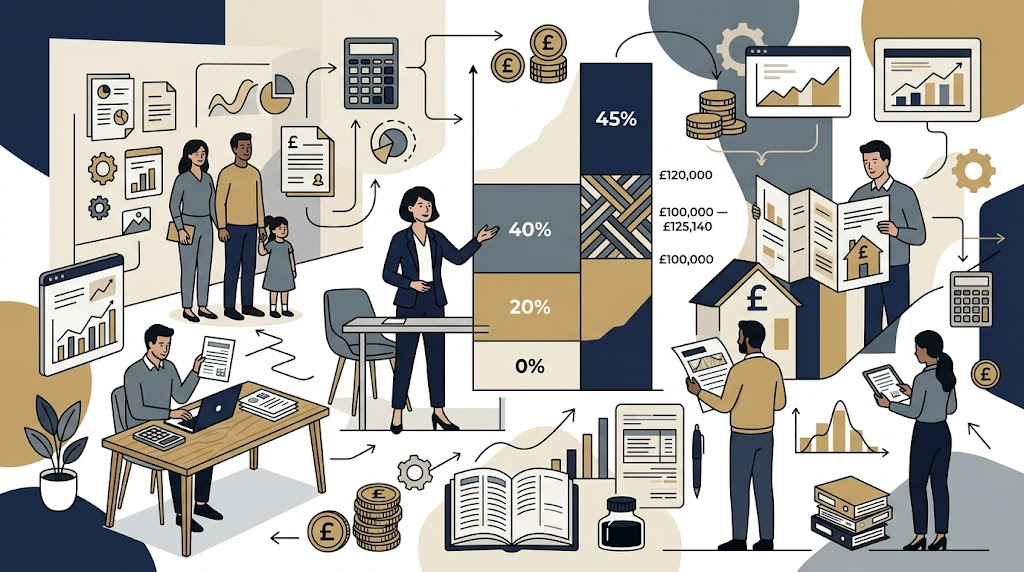
- Between £60,000 and £80,000: a taper applies. For every £200 of income above £60,000, you repay 1% of the Child Benefit received
- Above £80,000: the entire Child Benefit amount is clawed back
This is a significant improvement on the old rules. Before April 2024, the taper started at £50,000 and completed at £60,000. Many families were affected from relatively modest earnings.
What Counts as Income?
The charge is based on your “adjusted net income.” This is broadly your gross income minus certain deductions, including:
- Pension contributions (both personal and employer contributions under salary sacrifice arrangements)
- Gift Aid donations
- Trading losses
This means that paying more into a pension can reduce your adjusted net income and reduce or eliminate the charge. If you earn £65,000 but contribute £6,000 into a pension, your adjusted net income falls to £59,000, and no charge applies.
Who Does the Charge Apply To?
The charge applies to whichever partner has the higher income, as long as that income exceeds £60,000. It does not matter who is named as the Child Benefit claimant.
If both partners earn over £60,000, the charge falls on the one with the higher income.
If you are separated and your ex-partner claims Child Benefit, the charge does not apply to you, even if you earn over £60,000. The charge only applies when you are living with the claimant or in a relationship with them.
Your Options
You have three main choices if the HICBC applies to you:
1. Continue claiming and pay the charge. You receive Child Benefit during the year and repay some or all of it via your Self Assessment return. This keeps the money in your household temporarily and may suit people with variable income.
2. Opt out of receiving payments. You can ask HMRC to stop Child Benefit payments while keeping your entitlement registered. This is useful for protecting your National Insurance credits (see below) without having to deal with the charge.
3. Reduce your adjusted net income. Pension contributions are the most straightforward route. Salary sacrifice pension arrangements are particularly effective as they also reduce your National Insurance contributions.
Do Not Forget Your National Insurance Credits
If your child is under 12, the Child Benefit claim generates automatic National Insurance credits for the claimant. These credits count towards the State Pension.
If you stop claiming Child Benefit entirely, the lower-earning partner (often one who has paused work to care for children) may lose these credits. To avoid this, they should opt out of receiving payments rather than cancelling the claim altogether. The NI credits continue as long as the claim remains active, even if no payments are made.
Do I Need to File a Self Assessment Return?
Yes. If the HICBC applies to you and you do not already file a Self Assessment return, you will need to register with HMRC and file one. This is how the charge is collected.
If you have been receiving Child Benefit and earning over £60,000 without filing a return, you may owe the charge for previous years plus interest and potentially a penalty. It is worth reviewing your position and making a voluntary disclosure if needed.
Registering for Self Assessment is straightforward. HMRC requires you to notify them by 5 October following the end of the tax year in which the charge first applied.
Frequently Asked Questions
My partner claims Child Benefit but I earn over £60,000. Do I owe the charge? Yes. The charge applies to the higher earner in the household regardless of who claims Child Benefit. You need to register for Self Assessment and declare it.
Can I avoid the charge by paying more into my pension? Yes, this is a legitimate and effective approach. Pension contributions reduce your adjusted net income, which is the figure used to calculate the charge. If contributions bring your income below £60,000, no charge applies.
What if I did not know about the charge and have not been paying it? HMRC can investigate up to four years back for innocent errors, and up to 20 years for deliberate non-disclosure. If you have been unaware of the charge, make a voluntary disclosure as soon as possible. Penalties are reduced significantly for unprompted disclosure.
We have two children. Does the charge cover both? Yes. The charge is calculated on the total Child Benefit received, regardless of how many children are included in the claim.
Our income varies year to year. How do we manage this? You can start and stop Child Benefit payments as your income changes. If your income dips below £60,000 in a particular year, you can restart receiving payments. Managing this properly requires keeping track of your expected annual income, which a tax adviser can help with.
The rules changed in April 2024. Do the old thresholds apply to earlier years? Yes. For tax years before 2024/25, the charge applied from £50,000 and the full clawback occurred at £60,000. If you have outstanding liabilities from earlier years, those are calculated under the old rules.
Need Help With the High Income Child Benefit Charge?
Sat Bhatti is an ACCA and ATT qualified tax specialist and HMRC Registered Agent with over 25 years’ personal tax experience. If you are unsure whether the HICBC applies to your household, or you need to register for Self Assessment and file outstanding returns, Kent Tax Specialists can guide you through the process.
We advise individuals and families across Gravesend, Dartford, Medway, Maidstone, Sevenoaks, Tonbridge, Tunbridge Wells and the wider Kent area. Get in touch today for clear advice and a fixed-fee quote.
Also see: Self Assessment in Gravesend | Personal Tax Services | Personal Tax in Dartford