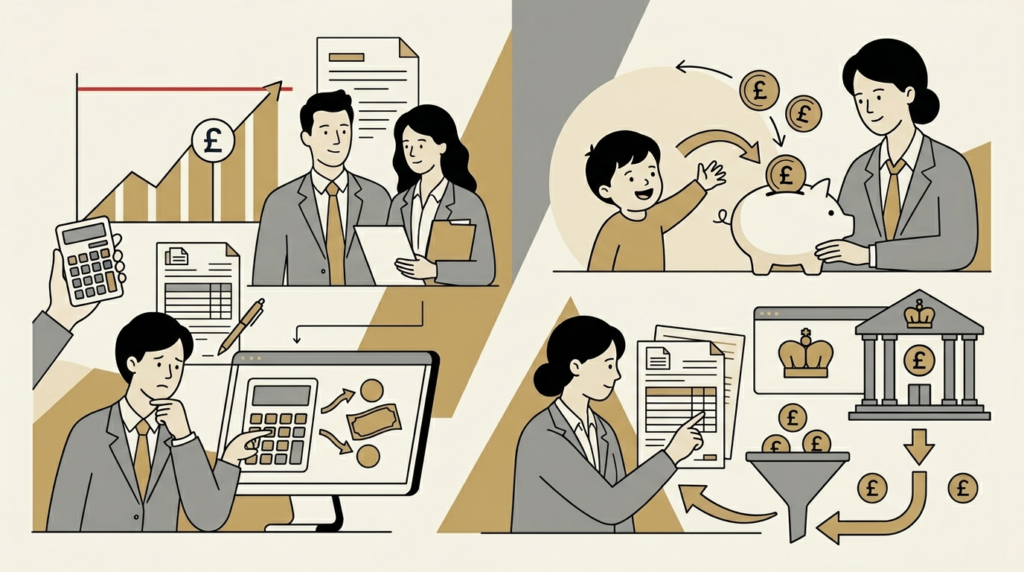

Making Tax Digital for Income Tax Self Assessment is coming, and for many sole traders and landlords across Kent the clock is already ticking. From April 2026, if your qualifying income exceeds £50,000 a year, you will be legally required to keep digital records and submit quarterly updates to HMRC. A year later, the same rules apply to those earning over £30,000.
This is one of the most significant changes to the UK tax system in a generation. This guide explains what it means, who it affects, and what you need to do to get ready.
Quick Answer
From April 2026, sole traders and landlords with income over £50,000 must use MTD-compatible software to keep digital records and submit four quarterly updates to HMRC each year, plus a final end-of-period statement. The deadline for those earning over £30,000 follows in April 2027. If this applies to you, getting set up now is far less stressful than leaving it until the last minute.
What Is Making Tax Digital for Income Tax?
Making Tax Digital (MTD) is an HMRC initiative to modernise the UK tax system by moving record-keeping and reporting online. MTD for VAT has been in place since 2019. MTD for Income Tax Self Assessment (MTD for ITSA) is the next phase.
Under MTD for ITSA, instead of filing a single annual Self Assessment return, you will:
- Keep digital records of your income and expenses throughout the year
- Submit quarterly updates to HMRC (four times a year)
- Submit a final end-of-period statement confirming the year’s figures
- Submit a final declaration (replacing the current annual return)
The quarterly updates are not tax payments. They are summaries of your income and expenses for each quarter, sent directly to HMRC via your software.
Who Does MTD for ITSA Apply To?
The mandation dates are:
| Threshold | Mandatory from |
|---|---|
| Qualifying income over £50,000 | April 2026 |
| Qualifying income over £30,000 | April 2027 |
| Qualifying income over £20,000 | April 2028 |
“Qualifying income” means the combined total of self-employment income and property income. PAYE income from employment does not count towards this threshold.
So if you are a landlord with rental income of £60,000 and no other self-employment, you will be affected from April 2026. If you are a sole trader earning £35,000, the April 2027 deadline applies to you.
What Software Do I Need?
You will need to use HMRC-recognised MTD-compatible software to keep your records and submit updates. There are several options available at different price points, ranging from simple apps to more comprehensive accounting packages.
The key thing to look for is that the software is approved for MTD for ITSA submission. Some tools useful for bookkeeping are not approved for actual submission, so check before committing.
For most sole traders and landlords with relatively straightforward affairs, a simple app will be sufficient and much cheaper than a full accounting package. Your tax specialist can recommend the right tool for your situation.
What Do the Quarterly Updates Involve?
Each quarterly update is a summary of your income and expenses for that quarter. You do not need to calculate your tax liability at this stage. You simply submit the totals, and HMRC uses them to build a running picture of your finances during the year.
The four quarters run:
- Quarter 1: 6 April to 5 July
- Quarter 2: 6 July to 5 October
- Quarter 3: 6 October to 5 January
- Quarter 4: 6 January to 5 April
Each update must be submitted within one month of the quarter end. Missing quarterly submissions will attract penalties.
What Happens to the Annual Self Assessment Return?
The traditional Self Assessment return is replaced by the end-of-period statement and final declaration under MTD. The final declaration serves a similar purpose to the current return and is due by 31 January following the end of the tax year, keeping the familiar January deadline.
How to Prepare Now
The earlier you start, the smoother the transition. Here is a sensible timeline:
Now: Review your current record-keeping. Are you already using a spreadsheet or accounting software? Is it MTD-compatible?
6 to 12 months before your mandation date: Choose your MTD software, set it up, and start using it for your record-keeping. Getting into the habit early means the quarterly submission process will feel routine rather than disruptive.
Before your mandation date: Make sure you are registered for MTD for ITSA with HMRC and that your software is connected to your HMRC account.
FAQs
I already file my own Self Assessment return. Do I still need to use MTD software? Yes, if your qualifying income exceeds the threshold. Once MTD for ITSA is mandatory for you, you cannot use the existing Self Assessment online service for annual filing. You must use MTD-compatible software.
What if I have both self-employment income and rental income? Both sources count towards the qualifying income threshold. If your combined total exceeds £50,000 (or £30,000 from April 2027), MTD for ITSA applies to you.
What happens if I miss a quarterly submission? HMRC is introducing a new points-based penalty system for MTD. Each missed submission earns a penalty point. Once you accumulate a certain number of points, a financial penalty is charged. The system is designed to be lenient for occasional misses but to penalise persistent non-compliance.
I use a spreadsheet for my records. Can I continue? Not directly. However, there are bridging software tools that connect a spreadsheet to the MTD submission system. It is not ideal for the long term, but it is an approved workaround. Many people in this situation prefer to move to a purpose-built app, which is often cheaper and simpler than maintaining spreadsheets.
Will MTD change how much tax I pay? No. MTD changes how and when you report income to HMRC, not the underlying tax rules. Your liability is calculated on the same basis as before.
Get MTD-Ready with Expert Help
Our principal tax adviser is an ACCA and ATT qualified tax specialist and HMRC Registered Agent with over 25 years of personal tax experience. Kent Tax Specialists is helping sole traders and landlords across Gravesend, Dartford, Maidstone, Medway, Tonbridge, Sevenoaks, Canterbury and the wider Kent area get ready for Making Tax Digital. Contact us today to find out exactly what you need to do and when.
Also see: Making Tax Digital in Gravesend | Making Tax Digital in Maidstone | Making Tax Digital in Dartford