One of the most common mistakes taxpayers make is not knowing what records to keep for their tax return throughout the year. When January arrives and the filing deadline looms, the scramble to find receipts, statements, and invoices is entirely avoidable. HMRC also requires you to keep records for a specified period, and the penalties for failing to do so can be significant.
This guide covers what you need to keep, how long to keep it, and how to make record-keeping as painless as possible.
Quick Answer
You must keep records that support every figure on your Self Assessment return. For most individuals this means keeping records for at least 22 months after the end of the tax year. For self-employed people and landlords it is at least 5 years and 10 months. HMRC can charge up to £3,000 for a failure to keep adequate records.
How Long Must You Keep Records?
The required retention period depends on your circumstances:
| Type of taxpayer | Keep records for |
|---|---|
| Employed with simple affairs | 22 months after end of tax year |
| Self-employed or in a partnership | 5 years and 10 months after end of tax year |
| Landlord with property income | 5 years and 10 months after end of tax year |
So for the 2025/26 tax year (ending 5 April 2026), a self-employed person or landlord must keep records until 31 January 2032.
If HMRC opens an enquiry into your return, you must keep all relevant records until the enquiry is closed, even if that extends beyond the normal retention period.
What Records Do Employees Need?
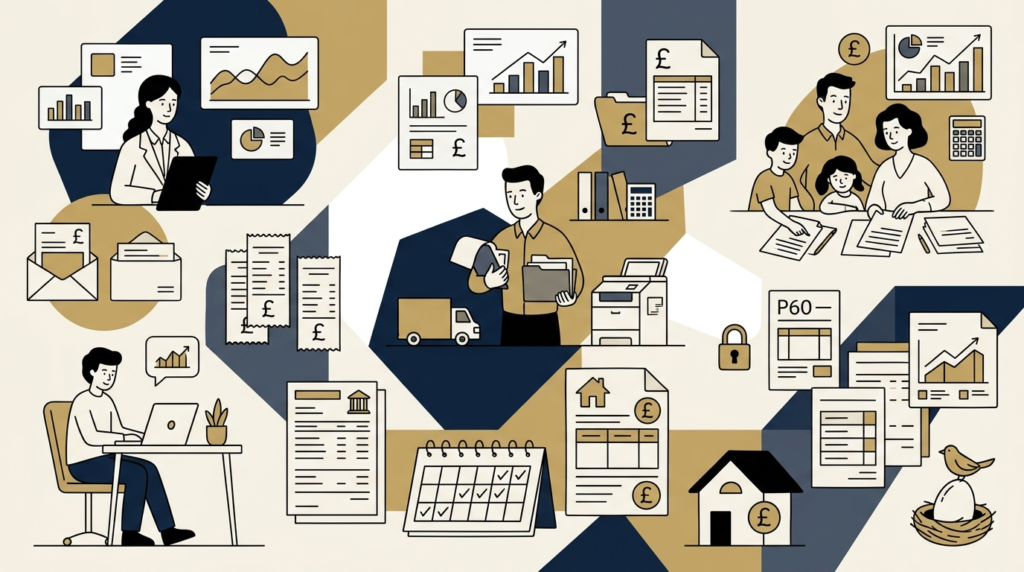
If your only income is from employment, your record-keeping requirements are relatively simple:
- P60 from each employer (issued at the end of the tax year)
- P11D showing any taxable benefits (company car, private medical insurance, etc.)
- P45 if you changed jobs during the year
- Any correspondence from HMRC about your tax code
- Bank statements showing savings interest received
- Records of charitable donations made under Gift Aid
- Evidence of any employment expenses you are claiming (professional subscriptions, uniform costs, etc.)
What Records Do Self-Employed Sole Traders Need?
The record-keeping obligations are more extensive for sole traders:
Income records:
- Invoices issued to clients
- Records of cash or bank payments received
- Till rolls or sales records if applicable
Expense records:
- Receipts and invoices for every business expense claimed
- Mileage logs if claiming vehicle costs
- Records of stock purchases and movements
- Bank and credit card statements
- Loan and finance agreements for business assets
Other:
- Records of any assets bought for the business (for capital allowances claims)
- Records of private use of business assets (for adjustments)
- If you employ anyone: payroll records, PAYE submissions, P60s issued
What Records Do Landlords Need?
Landlords should retain:
- Rental income received (bank statements, letting agent statements)
- All expense receipts: repairs, insurance, management fees, service charges, ground rent
- Mortgage statements showing interest charged
- Records of capital improvements (these may reduce CGT when you sell)
- Inventory records and deposit details
- Tenancy agreements
- Replacement of domestic items: receipts for new items replacing old ones
Digital Record-Keeping and Making Tax Digital
From April 2026, landlords and sole traders with qualifying income over £50,000 must keep digital records under Making Tax Digital for Income Tax Self Assessment. This means paper-based record-keeping will no longer be sufficient once MTD applies to you.
Even if you are not yet required to use MTD software, moving to a digital system now makes record-keeping significantly easier. Most modern bookkeeping apps allow you to photograph receipts on your phone, categorise expenses automatically, and produce a clean summary for your tax return.
What Happens If You Do Not Keep Records?
HMRC can charge a penalty of up to £3,000 per tax year for a failure to keep and retain adequate records. They can also make estimated assessments of your tax liability if records are incomplete, and these estimates are often unfavourable.
If your records are incomplete, HMRC may also conclude that further investigation is warranted, which can escalate a routine enquiry into something far more serious.
FAQs
Do I need to keep original paper receipts or will a photo suffice? HMRC accepts digital copies of documents as long as they are legible and complete. Most bookkeeping apps allow you to scan or photograph receipts and store them digitally, which is perfectly acceptable.
I have lost some receipts. Can I still claim the expenses? You can try to obtain duplicate receipts or statements from suppliers. Where records have been genuinely lost, bank statements showing the payment can serve as supporting evidence, though they are not as strong as original receipts. Be prepared to explain the situation to HMRC if questioned.
What if my business has closed? Do I still need to keep records? Yes. The retention periods apply regardless of whether you are still trading. If you ceased self-employment in 2024/25, you must still keep records for that year until 31 January 2031.
I use accounting software. Does it keep records automatically? Most cloud-based accounting software retains transaction data for several years, often longer than HMRC requires. However, you should not rely solely on the software provider. Maintain your own backups of bank statements, receipts, and other source documents in case you change software or the provider ceases trading.
HMRC is asking for records from 7 years ago. Do I have to provide them? Generally, HMRC can only request records going back the relevant statutory period. However, if HMRC has opened an enquiry specifically into that year, or there are allegations of deliberate non-compliance, longer periods may apply. A tax specialist can advise on the appropriate response.
Get Your Tax Records Organised
Our principal tax adviser is an ACCA and ATT qualified tax specialist and HMRC Registered Agent with over 25 years of personal tax experience working with sole traders, landlords and individuals across Kent. Kent Tax Specialists handles Self Assessment returns and can advise on the most efficient record-keeping approach for your circumstances. We cover Gravesend, Dartford, Maidstone, Medway, Sevenoaks, Tonbridge and the wider Kent area. Contact us today.
Also see: Self Assessment in Maidstone | Self Assessment in Sevenoaks