For your entire working life, PAYE handles your tax in the background. Your employer takes the right amount each payday, sends it to HMRC, and you barely have to think about it. The day you stop working, that system stops with you. And nobody from HMRC will ring to tell you what comes next.
Tax when you retire is one of the most expensive subjects to get wrong in the UK. Get it right and you keep thousands more of the money you saved over a working life. Get it wrong and HMRC quietly pockets the difference, or sends you a tax bill you were not expecting. This guide covers the ten things you should do the moment you stop work, written for people in Kent who would rather get this right first time than spend two years unpicking a mistake.
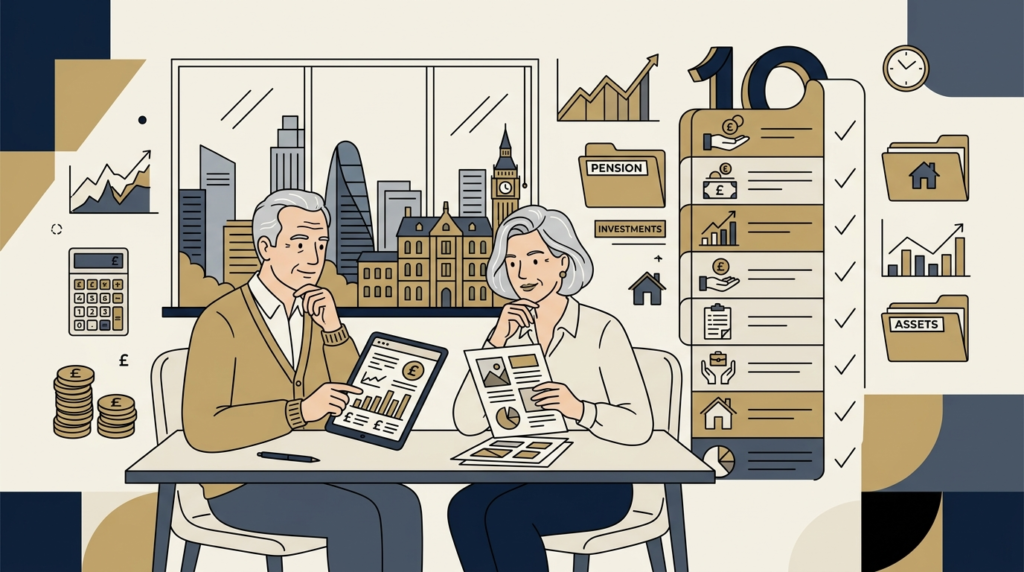
Quick Answer: The 10 Tax Actions Retirees Should Take
- Tell HMRC you have stopped working
- Set up your Personal Tax Account
- Claim your State Pension (it does not arrive automatically)
- Check your National Insurance record and plug any gaps
- Reclaim emergency tax on your first pension withdrawal
- Stack the three tax-free income allowances (up to £18,570)
- Claim Marriage Allowance and backdate four years
- Check any Simple Assessment letter within 60 days
- Register for Self Assessment if your tax affairs are now complex
- Plan for the April 2027 pension inheritance tax change
The order matters. The first two unlock most of the rest.
1. Tell HMRC You Have Stopped Working
HMRC builds your tax code from data that employers and pension providers feed into PAYE. When you retire, those data flows change, and HMRC does not always notice quickly. It can take months for the right tax code to filter through.
Here is the part nobody explains. Your State Pension is taxable, but it is paid gross. HMRC collects what you owe on it by reducing the tax code on your private or workplace pension. If that code is wrong, you are either overpaying every month or building up an underpayment that will land as a tax bill the following summer.
Either ring HMRC on 0300 200 3300 or use your Personal Tax Account (covered in step 2) and explain that you have recently retired and want your tax code to reflect all your pension income correctly. That phrase triggers a full reconciliation rather than a single source update.
Scotland note. Scottish taxpayers have an S prefix on the tax code (for example, S1257L). The principle is the same; the rates and bands differ.
2. Set Up Your Personal Tax Account
This is the single most useful tool you can have when tax when you retire becomes your problem rather than your employer’s. It is free at gov.uk/personal-tax-account and takes about ten minutes to set up if you have your National Insurance number, a recent payslip or P60, and either a passport or driving licence.
Once it is running you can check:
- Your current tax code
- Your State Pension forecast
- Your National Insurance record
- Letters HMRC has sent you
- The income figures HMRC is using to calculate your tax
If you moved house when you retired, update your address here. Letters chasing the old address do not stop arriving just because the new owners are binning them.
If you do nothing else after reading this article, do this. Everything else becomes easier.
3. Claim Your State Pension (It Does Not Arrive Automatically)
This catches more people than we would like to admit. The State Pension is claimed, not paid automatically. The Department for Work and Pensions (DWP) sends an invitation letter roughly four months before you reach State Pension age with a unique code. If you do not act on the letter, your State Pension defers. That can be a sensible strategy; it should not be an accidental one.
The full new State Pension in 2026/27 is around £241.30 a week, or £12,548 a year. To get the full amount you need 35 qualifying years of National Insurance contributions. Ten is the minimum needed to get anything at all. State Pension age is currently moving towards 67.
When the letter arrives, claim online at gov.uk/get-state-pension using the invitation code. If no letter has arrived and you are within three months of State Pension age, ring the Pension Service on 0800 731 7898. The first payment lands within five weeks.
A backdated claim is possible if you miss the date, but planning your cash flow around money that has not arrived is stressful. Claim on time.
4. Check Your National Insurance Record and Plug Any Gaps
Your State Pension depends entirely on your National Insurance contribution history. Gaps in your record reduce the pension you receive for life. Common reasons for gaps include time spent abroad, periods of self-employment with Class 2 contributions not paid, career breaks, and years caring for family.
You can check your record in your Personal Tax Account. Look for the section called “Check your National Insurance record”. It shows every tax year since you started work and whether each one is a full qualifying year, a gap, or a partial year.
Voluntary contributions can plug gaps. Class 3 voluntary NI in 2026/27 costs around £17.75 a week and buys one qualifying year. That year can add up to £344 a year to your State Pension for life. The payback period is typically under three years, which is one of the best returns available on any cash payment.
There are deadlines. You can usually only plug gaps from the last six tax years, although HMRC has occasionally allowed wider windows. Check the current rules in your Personal Tax Account before paying.
If you are still under State Pension age and your forecast is short of the full amount, this is one of the most valuable steps on this list.
5. Reclaim Emergency Tax on Your First Pension Withdrawal
This is where HMRC silence costs people thousands. The first time you take a flexible withdrawal from a defined contribution pension (a SIPP, a personal pension, or a workplace DC scheme), your provider almost certainly does not have your live tax code. HMRC requires them to apply something called the emergency month 1 code.
The emergency code treats your one-off withdrawal as if you will take the same amount every month for the rest of the tax year. A £10,000 one-off withdrawal is taxed as if you will take £120,000 over twelve months. The overpayment can be brutal.
Example. A 60-year-old in Kent draws £10,000 from a SIPP, with no other income that month. Under the emergency code, roughly £2,800 is taken in tax. The actual liability, given they have barely touched their personal allowance, is closer to nothing. They are owed almost the full £2,800 back.
The reclaim is one of three HMRC forms:
- P55 if you took part of your pot and plan to take more this tax year
- P50Z if you have emptied the pot and have no other taxable income
- P53Z if you have emptied the pot but still have other taxable income (your State Pension counts)
All three go through your Personal Tax Account. HMRC’s stated turnaround is 30 days. The reclaim is your money; HMRC will not return it unprompted.
6. Stack the Three Tax-Free Income Allowances (Up to £18,570)
Most retirees know about the £12,570 personal allowance. Far fewer know there are two more allowances that stack on top of it. With the right income mix you can have £18,570 of income a year without paying a penny of tax.
The three layers:
- Personal allowance: £12,570 on any income source
- Starting rate for savings: up to £5,000 of savings interest at 0%. This tapers down by £1 for every £1 of non-savings income above the personal allowance. So once your pension and other non-savings income hits £17,570 the starting rate has gone
- Personal Savings Allowance: £1,000 for basic rate taxpayers, £500 for higher rate, nothing for additional rate
Example. A retiree with State Pension of £11,000 a year, no workplace pension, and £15,000 in a building society account paying 4% earns £600 of savings interest. Total income £11,600. Tax bill: zero. The personal allowance covers the State Pension; the starting rate and PSA cover the savings interest with thousands of pounds of headroom to spare.
This matters more now than five years ago. Interest rates have stayed elevated, and ordinary cash savings now generate enough interest to pull retirees quietly into tax. Worse, HMRC estimates savings interest from the previous year. If you got pulled into tax on savings interest two years ago and have since moved the money into an ISA, your tax code may still be punishing you for income you no longer have.
If that is you, ring 0300 200 3300 and say: “My savings interest is now within my Personal Savings Allowance and starting rate for savings. Please remove the savings income adjustment from my tax code for the current year.”
ISA interest does not count towards any of these allowances. It is separate and tax-free regardless.
7. Claim Marriage Allowance and Backdate Four Years
If one of you earns under £12,570 and the other is a basic rate taxpayer (under £50,270 in England, Wales, and Northern Ireland; under £43,662 in Scotland), the lower earner can transfer £1,260 of their personal allowance to the higher earner. That cuts the higher earner’s tax bill by up to £252 a year.
You can backdate a claim by four tax years. A couple claiming for the first time can recover up to £1,008 in backdated payments plus £252 going forward.
HMRC’s own estimate is that around 2.4 million eligible couples have never claimed. The data exists, but HMRC does not write to people who qualify. You have to ask.
Apply free at gov.uk/marriage-allowance. The lower earner makes the claim, not the higher earner. That is the most common reason claims fail. You need both National Insurance numbers, and the application takes about ten minutes.
Avoid third-party reclaim companies. They charge 30 to 50% of your refund for something you can do yourself free in ten minutes.
8. Check Any Simple Assessment Letter Within 60 Days
If you owe tax that PAYE cannot collect automatically, HMRC will send a Simple Assessment letter. The reference at the top is PA302. Around 140,000 pensioners get one each year, mostly because their State Pension has crept above the personal allowance.
The system was designed to make life easier. In practice, the figures HMRC uses are often estimates, particularly the savings interest figure. They use last year’s number or what the bank’s annual return tells them.
You have 60 days from the date on the letter to dispute it. Not the date you opened it. If the letter sat in a pile for a month while you were on holiday, you have already burned half your window. After 60 days, the right to challenge collapses; you are paying whatever HMRC calculated even if it is wrong.
When one arrives, open it that day. Cross-check every figure against your P60s, pension statements, and bank interest summaries. Pay by 31 January following the tax year, or three months from the letter date if it arrived after 31 October.
Nine times out of ten the figure is right. The tenth time it is hundreds of pounds wrong. Always check.
9. Register for Self Assessment If Your Tax Affairs Are Now Complex
Some retirees find that PAYE and Simple Assessment cannot handle their tax position any more. The most common triggers are:
- Multiple pension pots paying simultaneously
- Rental income from a buy-to-let property
- Dividend income from an investment portfolio
- Self-employment in retirement (consulting or board work)
- Foreign pension or savings income
- Capital gains above the annual exempt amount
If any of these apply, you need to register for Self Assessment. The deadline is 5 October following the tax year in which the new income source started. For example, if you started receiving rental income in May 2025, you must register by 5 October 2026.
Register online at gov.uk/register-for-self-assessment. HMRC will send you a Unique Taxpayer Reference (UTR) within ten working days, which you need before you can file your first return.
The first return is the hardest. Many retirees use a tax specialist for the first year, then DIY in later years once they know the structure. Either approach is fine; what is not fine is missing the registration deadline and triggering penalties.
10. Plan for the April 2027 Pension Inheritance Tax Change
From 6 April 2027, unused defined contribution pensions will be brought into your estate for inheritance tax (IHT). This ends a rule that has been in place since 2015. Advisers have spent the last decade telling people to spend their other savings first and leave the pension untouched because pensions sat outside IHT. From April 2027 that calculation flips.
The Treasury expects this change to affect roughly 8% of estates and raise £1.46 billion a year by 2029/30. If your retirement plan was built around the old rule, it needs another look before April 2027.
The Autumn 2025 Budget added a spousal exemption. Pension assets passing to a surviving spouse or civil partner stay exempt. Children and other beneficiaries do not.
The IHT framework around it:
- Nil rate band: £325,000 per person, frozen until at least 2030/31
- Residence nil rate band: £175,000 per person if your home passes to a direct descendant
- A married couple with a home can pass up to £1 million IHT-free between them
- Above the thresholds: 40% IHT, or 36% if at least 10% of the estate goes to charity
The gifting allowances HMRC expects you to know:
- £3,000 a year annual gift exemption (one unused year can be carried forward)
- £250 small gifts to as many different people as you like
- £5,000 to a child getting married, £2,500 to a grandchild, £1,000 to anyone else
- Regular gifts out of normal income are fully exempt if they do not reduce your standard of living and form a clear pattern
Estate planning in retirement is a longer conversation. The point here is that the rules are changing, and the strategy that made sense in 2024 may not be the right strategy in 2027.
FAQs
When do I need to tell HMRC I have retired?
As soon as you stop working, even if you do not start drawing a pension straight away. HMRC builds your tax code from PAYE data and that data stops flowing when you retire. Telling HMRC triggers a reconciliation and gets your tax code right faster.
Why does HMRC tax my pension withdrawal so heavily the first time?
Your pension provider has to apply an emergency month 1 tax code because they do not yet have your live code. The emergency code assumes you will take the same withdrawal every month for the rest of the tax year, which heavily overtaxes a one-off. The remedy is reclaiming via form P55, P50Z, or P53Z.
How much tax-free income can I have in retirement?
With the right income mix, up to £18,570 a year. That stacks the £12,570 personal allowance with the £5,000 starting rate for savings and the £1,000 Personal Savings Allowance. ISA interest is separate and tax-free on top.
Can I claim Marriage Allowance for previous years?
Yes. You can backdate a claim by four tax years. A first-time claim today can recover up to £1,008 in backdated payments plus £252 going forward.
What is a Simple Assessment and what should I do with it?
A Simple Assessment (reference PA302) is a tax demand HMRC issues when PAYE cannot collect what you owe automatically. You have 60 days from the date on the letter to dispute it. Always cross-check the figures against your own records before paying.
How will the 2027 pension IHT change affect me?
From 6 April 2027, unused defined contribution pensions will count towards your estate for inheritance tax. Pension assets passing to a surviving spouse remain exempt; those passing to children or other beneficiaries do not. If your existing plan assumes pensions are outside IHT, it needs a review before April 2027.
Get Expert Retirement Tax Advice in Kent
Kent Tax Specialists is an ACCA and ATT qualified, HMRC Registered Agent practice with over 25 years’ personal tax experience. We help retirees and people approaching retirement across Gravesend, Dartford, Maidstone, Medway, Sevenoaks, Tonbridge, Tunbridge Wells, Canterbury, and the wider Kent area with tax code reviews, emergency tax reclaims, Marriage Allowance backdating, Simple Assessment checks, Self Assessment registration, and tax planning before the 2027 pension IHT change. Get in touch today for honest advice and a fixed-fee quote.
Also see: How Does Marriage Allowance Work? | How to Check If You Have Overpaid Tax Through PAYE | Personal Tax services in Kent