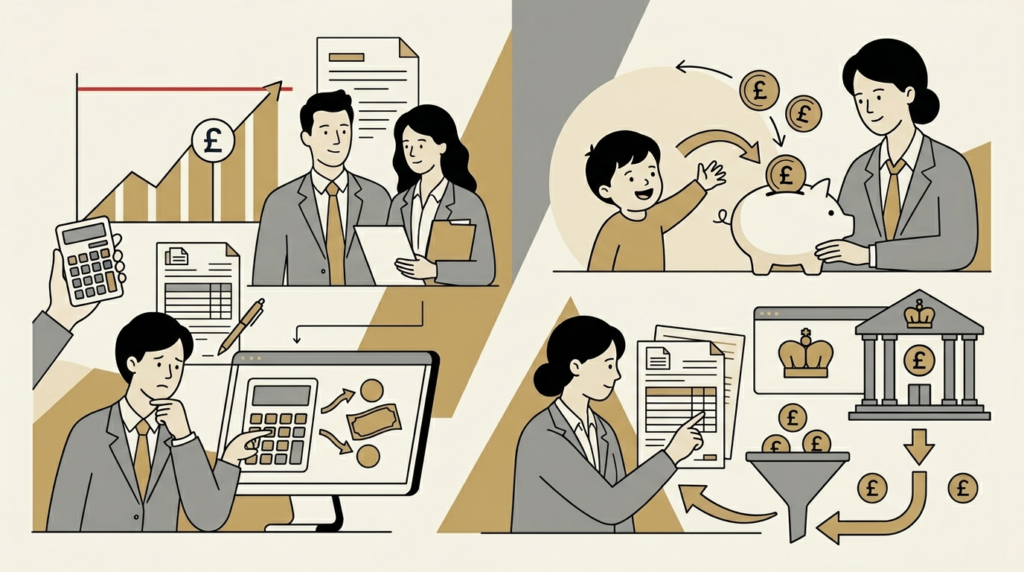

Getting a letter from HMRC can feel alarming, even when it turns out to be good news. A P800 is one of the more common letters HMRC sends, and it simply tells you that their records suggest you have either paid too much or too little tax during the year. Understanding what it means and what to do next is straightforward once you know what you are looking at.
Quick Answer: What Is a P800?
A P800 is a tax calculation letter sent by HMRC to employed people and pensioners. It shows HMRC’s calculation of whether you have paid the right amount of Income Tax during the tax year. If you have overpaid, HMRC will either send you a refund automatically or tell you how to claim one online. If you have underpaid, HMRC will usually collect the tax through your PAYE code over the following year.
Who Gets a P800?
P800s are sent to people who pay tax through PAYE (Pay As You Earn), which includes most employees and those drawing a company or private pension. HMRC sends them after the end of the tax year, usually between June and November, once they have matched your employer or pension provider’s records against what they expected you to pay.
If you file a Self Assessment tax return, you will not normally receive a P800 because your tax position is calculated through your return instead.
What Does a P800 Show?
The letter sets out:
- Your total income for the tax year from all sources HMRC holds on record
- The total tax HMRC believes you should have paid
- The total tax you actually paid through PAYE
- The difference between the two amounts
If you paid more than you should have, HMRC will show a refund due. If you paid less, it will show the amount owed.
If You Have Overpaid Tax
This is the more welcome outcome. If your P800 shows a refund, HMRC may process it automatically and send a cheque to the address they hold on file, or you may be able to claim it faster online through the Government Gateway.
If you are entitled to a refund of more than £10, HMRC will normally write to you with instructions. Do not ignore the letter. You have four years from the end of the relevant tax year to claim a tax refund before the right to claim expires.
If You Have Underpaid Tax
If the P800 shows you owe tax, HMRC will usually collect it through your PAYE code in the following tax year. This means your tax code is reduced, so a slightly larger amount of tax is taken from your salary or pension each month until the debt is cleared.
HMRC will not usually collect underpaid tax if the amount is below £10. There is also a concession called Extra Statutory Concession A19, which may mean HMRC cannot collect old underpayments in certain circumstances, particularly where the underpayment arose because of an HMRC error.
Common Reasons for a P800
There are several common reasons why your tax position might not have balanced correctly through PAYE:
- You changed jobs during the year and had more than one employer
- You received a redundancy payment or other one-off payment
- Your employer used an emergency tax code for part of the year
- You had income from more than one source and the allowances were not allocated correctly
- Your pension income changed during the year
- You received taxable state benefits such as Jobseeker’s Allowance
Should You Check the P800 Figures?
Yes, always. HMRC’s systems are good but not infallible. The figures in your P800 are based on information reported by your employer and pension providers, and errors do occur.
Check your P800 against:
- Your P60 from each employer for the relevant year
- Your payslips, particularly for any lump sum payments
- Any pension or annuity statements
- Benefit-in-kind records if you received a company car or other taxable benefit
If you spot a discrepancy, contact HMRC before accepting the P800 figure or processing any payment.
Can a P800 Lead to a Self Assessment Requirement?
Receiving a P800 does not automatically mean you need to register for Self Assessment. However, if your tax affairs have become consistently complicated, for example because you have multiple income sources, rental property, or significant investment income, it may be worth registering for Self Assessment so your tax position is calculated accurately each year.
What if You Get a Simple Assessment Instead?
HMRC also issues Simple Assessments, which are a form of tax bill rather than just a notification. A Simple Assessment can be issued to pensioners and people with certain types of income that fall outside PAYE. If you receive one, you need to pay the amount shown by the deadline on the notice, unless you believe the figures are wrong.
Frequently Asked Questions
I received a P800 showing a refund. How quickly will I get the money?
If HMRC offers an online claim, you can typically receive the refund within five working days. If HMRC sends a cheque automatically, it usually arrives within two to three weeks of the letter.
I think my P800 is wrong. What should I do?
Do not pay or accept the refund until you have checked the figures. Contact HMRC to query the calculation. Have your P60 and payslips to hand when you call. If the issue is complex, a tax adviser can help you work through the figures and correspond with HMRC on your behalf.
My P800 says I owe tax from three years ago. Do I still have to pay it?
Generally yes, but there are rules that protect taxpayers when HMRC takes too long to raise an assessment. HMRC normally has four years from the end of the tax year to collect underpaid tax. However, if the underpayment arose because HMRC failed to act on information they already held, you may be able to challenge it under the A19 concession.
Can I just ignore a P800 that shows I owe money?
No. If you do not respond, HMRC will adjust your tax code to collect the underpayment, and the adjustment will appear in your next employer payroll. Ignoring it does not make it go away, and errors left unaddressed may compound.
My employer used the wrong tax code and I underpaid tax through no fault of my own. Can I still be asked to pay?
HMRC may still pursue the underpayment, but if the error was caused by HMRC using an incorrect code despite having the right information, you may have grounds to challenge collection under A19. This is worth taking professional advice on.
Get Your Tax Right With Expert Help
Most P800 letters are straightforward, but if you think the figures are wrong, if you keep receiving them year after year, or if the amount involved is significant, it is worth getting a professional to look over your position.
Our principal tax adviser is ACCA qualified, ATT qualified, and an HMRC Registered Tax Agent with over 25 years of experience. We help clients across Gravesend, Dartford, Medway, Maidstone, Tonbridge, and Sevenoaks understand their tax position and deal with HMRC correspondence. Contact us today for straightforward personal tax advice.
Also see: Personal Tax in Gravesend | Self Assessment Tax Return in Gravesend | Personal Tax in Medway